
Moving from labouring or working in a trade into site supervision can be a good way to progress your construction career.
It can lead to better pay, more responsibility and, eventually, opportunities in site management.
However, becoming a supervisor involves much more than taking a Site Supervison Safety Training Scheme (SSSTS) course, getting a different Construction Skills Certification Scheme (CSCS) card or being given a radio and a clipboard.
A good supervisor needs construction knowledge, organisation skills, confidence and, above all, the ability to get people working together.
Before paying for a course, it is worth understanding what the job actually involves and whether it is likely to suit you.
What does a construction site supervisor do?
The exact job depends on the size and type of project.
On a small site, the supervisor may help organise most of the day-to-day work. On a larger project, they might be responsible for one trade, subcontractor, section of the building or stage of the work.
A supervisor might be responsible for:
- Checking what work is planned
- Organising workers and subcontractors
- Coordinating different trades
- Checking that materials and plant are available
- Monitoring progress
- Checking the quality of completed work
- Making sure work is carried out safely
- Delivering briefings and toolbox talks
- Reporting delays and problems
- Completing site records
- Speaking to the site manager, suppliers and subcontractors
The National Careers Service describes the role as including organising work schedules, managing deliveries, checking plans, inspecting work, monitoring progress and completing reports for construction managers.
In practice, a large part of the job is solving problems before they delay the project.
Why are supervisors always on the phone?
People working on site often see supervisors walking around with a phone or radio and wonder what they are doing.
They may be:
- Chasing a delivery
- Finding out why materials have not arrived
- Arranging access for another trade
- Confirming which drawing should be followed
- Finding extra labour
- Reporting a defect
- Organising plant
- Checking when an inspection will take place
- Warning the site manager about a delay
- Preventing one problem from holding up several other trades
Construction work rarely goes exactly to plan.
Materials arrive late. Drawings change. Workers are absent. Previous work has not been completed. Plant breaks down. Access is blocked. One trade needs to finish before another can begin.
The supervisor is often the person expected to bring all these moving parts together. That’s why the job can be very stressful.
What paperwork does a site supervisor complete?

The paperwork varies between employers and projects, but it can include:
- Site diaries
- Daily progress reports
- Labour records
- Delivery records
- Inspection sheets
- Quality checks
- Toolbox talk records
- Risk assessment and method statement briefings
- Plant checks
- Defect or snagging lists
- Accident and near-miss reports
- Photographs of completed work
- Records of delays or changes
This paperwork is not separate from the real job.
It provides a record of what was planned, what workers were told, what was inspected and what action was taken.
If something goes wrong, people will ask:
- Who knew about the problem?
- When did they know?
- What did they do about it?
- Were the workers properly briefed?
- Was the work checked?
- Is there a written record?
As the Grenfell Tower Inquiry showed, records and decisions may be examined in detail after a serious incident. It is therefore essential that site records are accurate and properly maintained.
A supervisor therefore needs to be reasonably comfortable using email, mobile apps, photographs, spreadsheets and online reporting systems.
You do not need to be an expert computer user. You do need to be willing to learn.
The biggest change is being responsible for other people
The move from labouring or working in a trade into supervision is not simply a move away from physical work.
The biggest change is that you become responsible for organising and influencing other people.
A supervisor needs to be able to:
- Get a clear understanding of what needs to be achieved
- Give clear instructions
- Explain what needs to happen and why
- Listen when someone raises a genuine problem
- Challenge poor work
- Deal with disagreements calmly
- Make decisions under pressure
- Treat people fairly
- Keep work moving
- Know when to ask for help
- Stop work when it is unsafe
This can be difficult.
You may be supervising experienced tradespeople who know far more about their individual jobs than you do. Some may have worked in construction for longer than you have. Others may not like being told what to do.
Your authority will not come only from your job title.
People are more likely to respect a supervisor who is consistent, fair, calm and willing to listen. Taking an interest in your people in a genuine sense will make your job easier and enable you to put staff onto tasks that best suit their capabilities.
Shouting is not leadership
Despite the macho attitudes that still prevail too often in construction, shouting and swearing at people is rarely the best way to solve problems or improve productivity.
It might produce an immediate reaction, but it does not necessarily solve the reason why the work has fallen behind.
A good supervisor will first try to understand what is preventing progress.
Is the worker waiting for materials?
- Is access blocked?
- Was the instruction unclear?
- Has previous work been completed incorrectly?
- Is the programme unrealistic?
- Does the worker lack the right information, plant or support?
The supervisor can then help remove the obstacle and get the work moving again.
That does not mean avoiding difficult conversations. Supervisors sometimes need to be firm. Unsafe behaviour, deliberate poor workmanship and repeated failure to follow instructions cannot simply be ignored.
However, being firm is not the same as losing your temper.
Look at the people who currently supervise you and your colleagues. Which ones are the most effective?
They are the people to learn from.
Do supervisors need to know every trade?
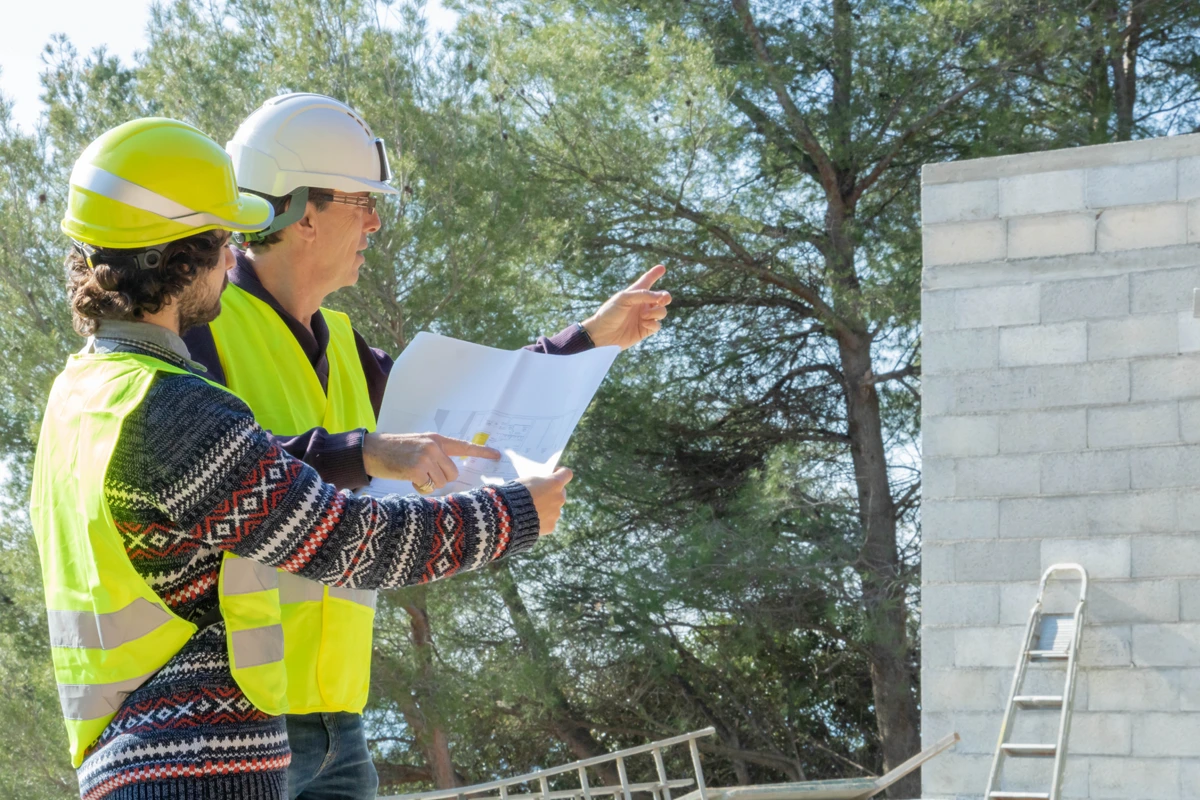
No supervisor can know everything about every construction trade.
A supervisor does not need to be a better bricklayer than every bricklayer, a better dry liner than every dry liner or a better groundworker than every groundworker.
However, they do need enough construction knowledge to:
- Understand the normal sequence of work
- Recognise obvious problems
- Read and discuss drawings
- Ask sensible questions
- Check whether work appears to meet the required standard
- Understand how one trade affects another
- Know when specialist advice is needed
A good supervisor is comfortable saying:
“I don’t know the answer, but I know who we need to ask.”
Pretending to understand something can be much more dangerous than admitting that you need more information.
Is SSSTS a site supervisor qualification?
The Site Supervision Safety Training Scheme, usually known as SSSTS, is useful training for new and aspiring supervisors.
It is a two-day course covering subjects such as health and safety law, risk assessments, method statements, site inductions, toolbox talks, monitoring work and intervening when poor practice is identified. The Construction Industry Training Board (CITB) says it is intended for people who have, or are about to have, supervisory responsibilities.
However, SSSTS is not a complete site supervision qualification.
It does not prove that you can:
- Organise workers
- Coordinate trades
- Monitor a programme
- Check workmanship
- Manage deliveries
- Keep suitable records
- Resolve disputes
- Lead a team
It is therefore misleading to think of SSSTS as a “supervisor ticket” that automatically makes someone qualified for the job.
It provides important safety knowledge. It does not replace construction experience or leadership ability.
Can you complete a supervision NVQ before becoming a supervisor?
A construction NVQ is different from a classroom course.
An NVQ assesses the skills and knowledge you demonstrate through your actual work. It is not normally a course you complete first so that you can begin doing the job afterwards.
For example, the NOCN Level 3 NVQ Diploma in Occupational Work Supervision (Construction) is intended to demonstrate competence in a real workplace.
Candidates need relevant occupational experience, experience supervising teams and occupational competence at least equivalent to Level 2. Evidence of suitability may include an existing qualification, employer confirmation, professional discussion or portfolio evidence.
Someone who has never supervised people and has no relevant occupational competence would not normally be ready to complete this NVQ.
The sensible order is usually:
- Gain construction experience.
- Start taking on small supervisory responsibilities.
- Build experience organising people and work.
- Begin the appropriate NVQ when you are genuinely doing the job.
- Use workplace evidence to demonstrate your competence.
Occupational Work Supervision or Construction Site Supervision?
The words used for construction roles are not always consistent.
One employer might use “supervisor”, another might use “foreman” or “ganger”, and another might use “assistant site manager”.
However, there is an important qualification distinction.
Occupational Work Supervisor
An occupational work supervisor normally supervises a team, gang or area of occupational work.
Examples might include someone supervising:
- A carpentry gang
- Bricklayers
- Dry liners
- Groundworkers
- Roofers
- Painters
- General construction operatives
The recognised qualification associated with the Occupational Work Supervisor occupation is the Level 3 NVQ Diploma in Occupational Work Supervision (Construction).
Building Site Supervisor
A building site supervisor may have wider responsibility across the site.
The role could involve coordinating several subcontractors, monitoring the overall programme and quality, arranging inspections and reporting to the site manager.
CSCS associates the Building Site Supervisor occupation with a Level 4 NVQ Diploma in Construction Site Supervision, rather than the Level 3 Occupational Work Supervision qualification.
The correct qualification therefore depends on what you actually do, not simply the job title written on your payslip.
A reputable assessment provider should ask about your role before recommending a qualification.
What is needed for a Gold CSCS Supervisor card?
The Gold CSCS Supervisor card is available for approved supervisory and technical occupations.
Applicants need an appropriate construction-related supervisory or technical NVQ or SVQ at Level 3 or Level 4. They must also pass the CITB Specialist Supervisory Health, Safety and Environment Test.
SSSTS alone does not meet the qualification requirement for the Gold Supervisor card.
The appropriate route depends on the occupation being shown on the card. For example, CSCS lists Occupational Work Supervisor and Building Site Supervisor separately, with different NVQ requirements.
Always check the current CSCS requirements for the occupation you intend to apply for before paying for training or assessment.
How can a labourer start moving towards supervision?
Experience as a labourer can provide a useful foundation.
Labourers often see more of the overall construction process than people realise. They work alongside different trades, see how materials move around the site and learn where delays and disagreements usually occur.
However, helping trades is not the same as being responsible for their work.
A good first step is to speak to your present supervisor or site manager.
Explain that you are interested in progressing and ask whether you can begin taking on small amounts of responsibility.
This might include:
- Helping coordinate a delivery
- Checking that an area is ready for the next trade
- Recording work completed
- Taking progress photographs
- Checking housekeeping
- Helping brief a small team
- Keeping track of materials
- Shadowing a supervisor
- Completing part of the site diary
- Reporting a problem clearly to management
These tasks provide a more realistic introduction to supervision than simply booking a course.
They also allow your employer to see whether you are reliable, organised and able to communicate with people.
Learn from the supervisors around you
Most construction sites contain examples of both good and poor supervision.
Watch how different supervisors behave.
When a problem occurs:
- Do they immediately start blaming people?
- Do they find out what has actually happened?
- Do they explain their decisions?
- Do they remain calm under pressure?
- Do they treat different workers fairly?
- Do they check that instructions have been understood?
- Do people tell them about problems early, or try to hide them?
Good supervisors often make the job look easier because people are willing to speak to them before small problems become serious ones.
Take the best qualities from several people rather than copying one person completely.
Can a site supervisor become a site manager?
Yes.
Supervision can lead towards assistant site manager and site manager roles.
However, progression comes from increasing experience and responsibility, not simply collecting certificates.
A site manager may be responsible for:
- The overall construction programme
- Several subcontractors
- Health and safety arrangements
- Quality standards
- Labour and resources
- Client communication
- Inspections and handovers
- Costs and variations
- Progress meetings
- Reporting to senior management
Further training and qualifications are normally required as responsibilities increase.
The National Careers Service identifies construction management, contract management, health and safety, estimating and surveying as possible progression routes from site supervision.
A sensible route into construction supervision
There is no single route that works for everybody, but a practical progression plan might be:
- Build your construction knowledge.
Pay attention to how different trades fit together and how the work is sequenced. - Tell your employer you want to progress.
Opportunities are more likely to appear if managers know you are interested. - Shadow a good supervisor.
Watch both the visible site work and the paperwork behind it. - Take on small responsibilities.
Show that you can be trusted before asking to supervise a large team. - Improve your communication and computer skills.
Clear emails and accurate records are part of modern site supervision. - Complete SSSTS at the appropriate time.
Ideally, take it when you are about to receive genuine supervisory responsibility. - Begin the correct NVQ once you are doing the job.
Check whether your responsibilities fit Occupational Work Supervision or the broader Construction Site Supervision route. - Continue learning from experience.
A qualification can confirm competence, but it does not make anyone a perfect supervisor.
Do not buy a qualification before checking your role
Before enrolling on an NVQ, speak to an assessment provider and explain exactly what you do.
They should ask about:
- Your construction background
- Your occupational competence
- The people you supervise
- The work you organise
- Your responsibility for health and safety
- The records you complete
- The decisions you make
- The evidence available from your workplace
If the qualification does not match your current role, a responsible provider should tell you.
Sometimes the correct advice will be to gain more experience before beginning an NVQ.
The final question: would supervision suit you?
Supervision can be a rewarding career move, but it is not right for everyone.
Ask yourself whether you would be comfortable:
- Taking responsibility for other people’s work
- Having difficult conversations
- Dealing with constant interruptions
- Keeping accurate records
- Challenging unsafe behaviour
- Making decisions under pressure
- Being held accountable when work falls behind
- Helping people solve problems rather than simply blaming them
You do not need to have every skill before taking your first step.
You do need to be willing to learn, listen and accept responsibility.
Before paying for any course, try to spend time shadowing a competent supervisor. Even one day seeing the whole job — including the phone calls, meetings and paperwork — may tell you more than a course advertisement ever could.
Already supervising occupational work?
If you already supervise a construction team, gang or area of occupational work, the NOCN Level 3 NVQ Diploma in Occupational Work Supervision (Construction) may allow you to demonstrate your existing competence and work towards the appropriate Gold CSCS Supervisor card.
Find out more about the Level 3 Occupational Work Supervision NVQ.